COMPANY
Oracle Integration Cloud
ROLE
Principal Designer
THE PROBLEM
A zero-to-one design challenge: developers had built dozens of integrations in Oracle but had no way to expose them to an AI agent in a form the agent could act on.
THE OUTCOME
Shipped the Agentic AI tool configuration UX and observability interface for Oracle Integration Cloud. Also formed Oracle's internal AI Working Group ahead of ChatGPT's launch.
AGENTIC AI
Building something that didn't exist yet
The Agentic AI project at Oracle was a zero-to-one effort. There was no existing pattern to extend and no prior art inside the product to reference. The starting point was a clear user goal:
As a developer, I need to be able to leverage my integrations to automate business processes.
That statement sounds simple, but it carries significant complexity. Developers on Oracle Integration Cloud had already built connections to dozens of external systems. The challenge was giving them a way to expose those connections to an AI agent in a form the agent could actually act on, with the right inputs, the right outputs, and the right guardrails built in.
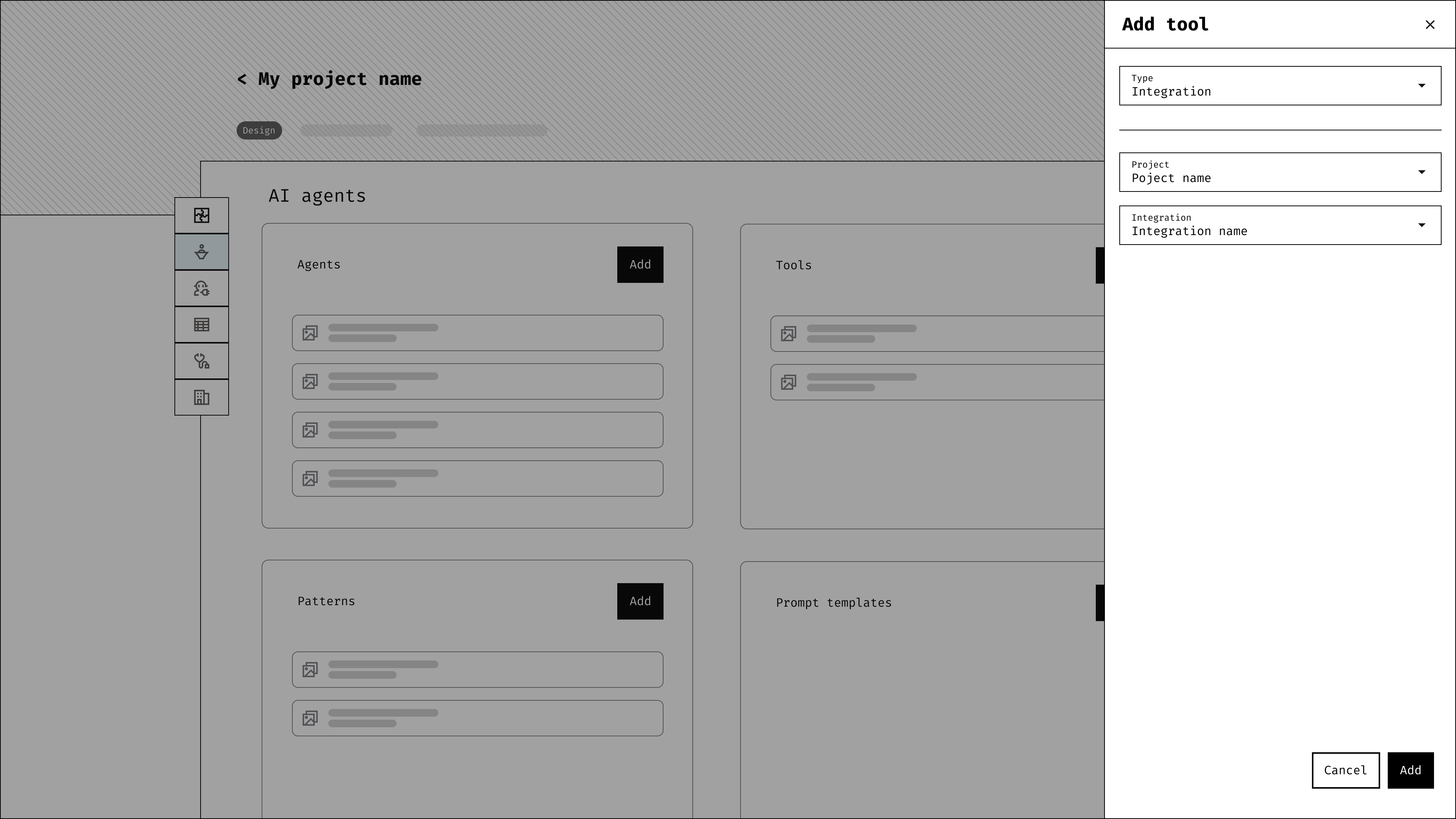
Wireframe of the Agentic AI project folder
Designing a flexible way to define what a tool knows
One of the core design challenges was figuring out how developers would tell an agent what to pass to an integration: what inputs are required, what they represent, and what format they need to be in. Integrations in Oracle are powerful but highly varied. A tool definition that works for a Salesforce connector looks very different from one built on a REST API or a database query.
The design needed to be flexible enough to handle that variation without pushing the complexity back onto the developer. That meant creating a structured but composable interface for describing parameters, one that felt familiar to developers while staying legible to the agent consuming it.
A flexible way to configure tools that also created confidence in data integrity
Seeing what the agent is actually doing
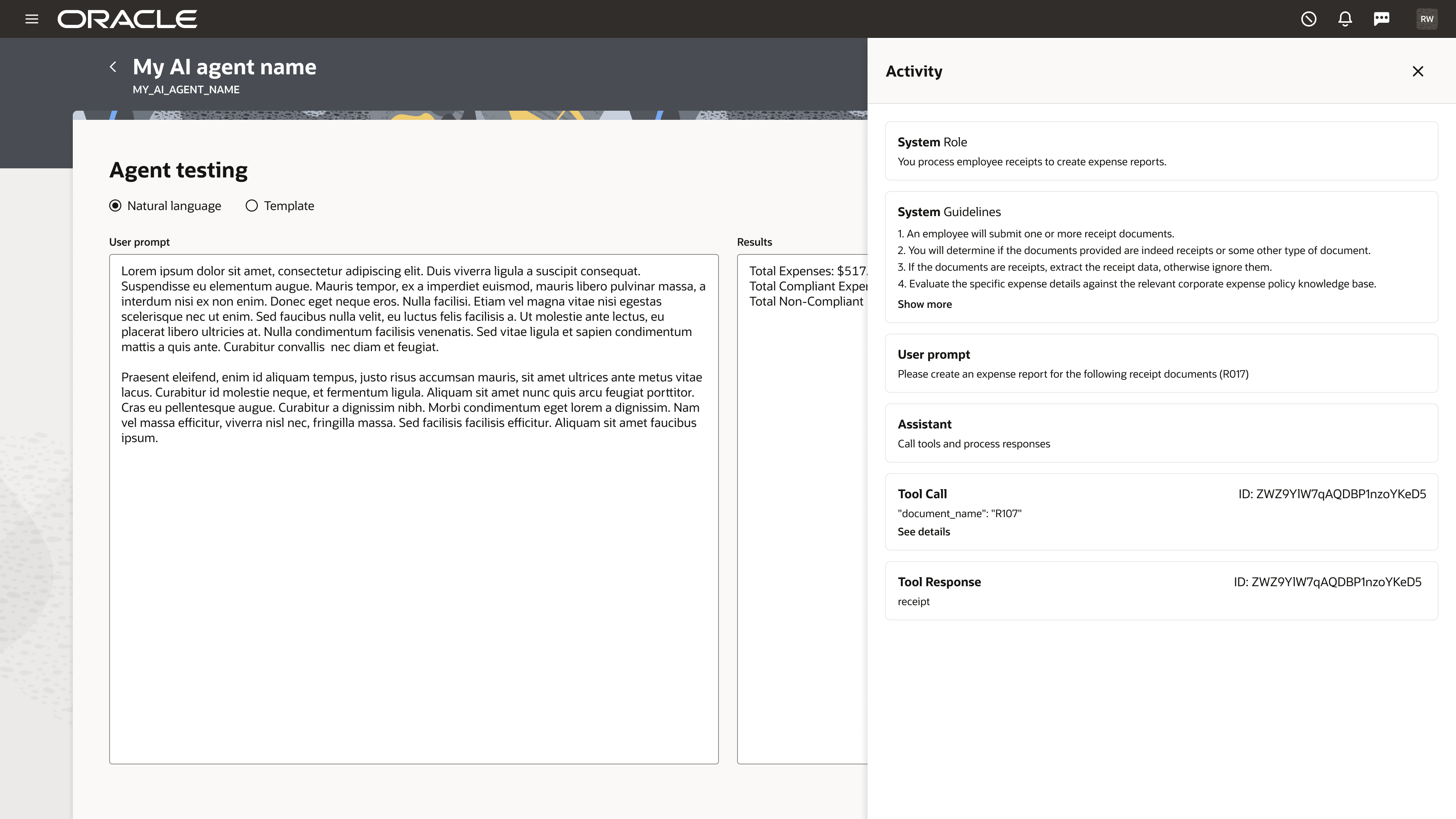
Once a tool is configured and wired to an agent, the next critical question is: how do you know it's working? Testing agentic systems is fundamentally different from testing a form or an API call. The agent reasons through a sequence of steps, and any one of those steps can go in an unexpected direction. Making that reasoning visible and actionable was a major design challenge.
We went through several rounds of design exploration before landing on the right approach. Early versions tried to surface too much at once, burying the signal in noise. Later iterations swung too far toward simplicity and lost the detail developers needed when something went wrong. The best progress came from design reviews that used the artifacts themselves as the starting point for conversation, bringing engineers, PMs, and designers into the same discussion with specific screens to react to, rather than abstract descriptions of what the interface should do.
Three different designs explored for testing and observing agents
RESULTS
Among the first enterprise iPaaS platforms to ship MCP support
Oracle Integration was among the first enterprise iPaaS platforms to expose existing integrations as MCP servers, shipping support in the 25.10 and 26.01 releases so any MCP-compatible AI agent could invoke enterprise automations as governed tools.
RELATED WORK
RPA: automating before agents were a thing
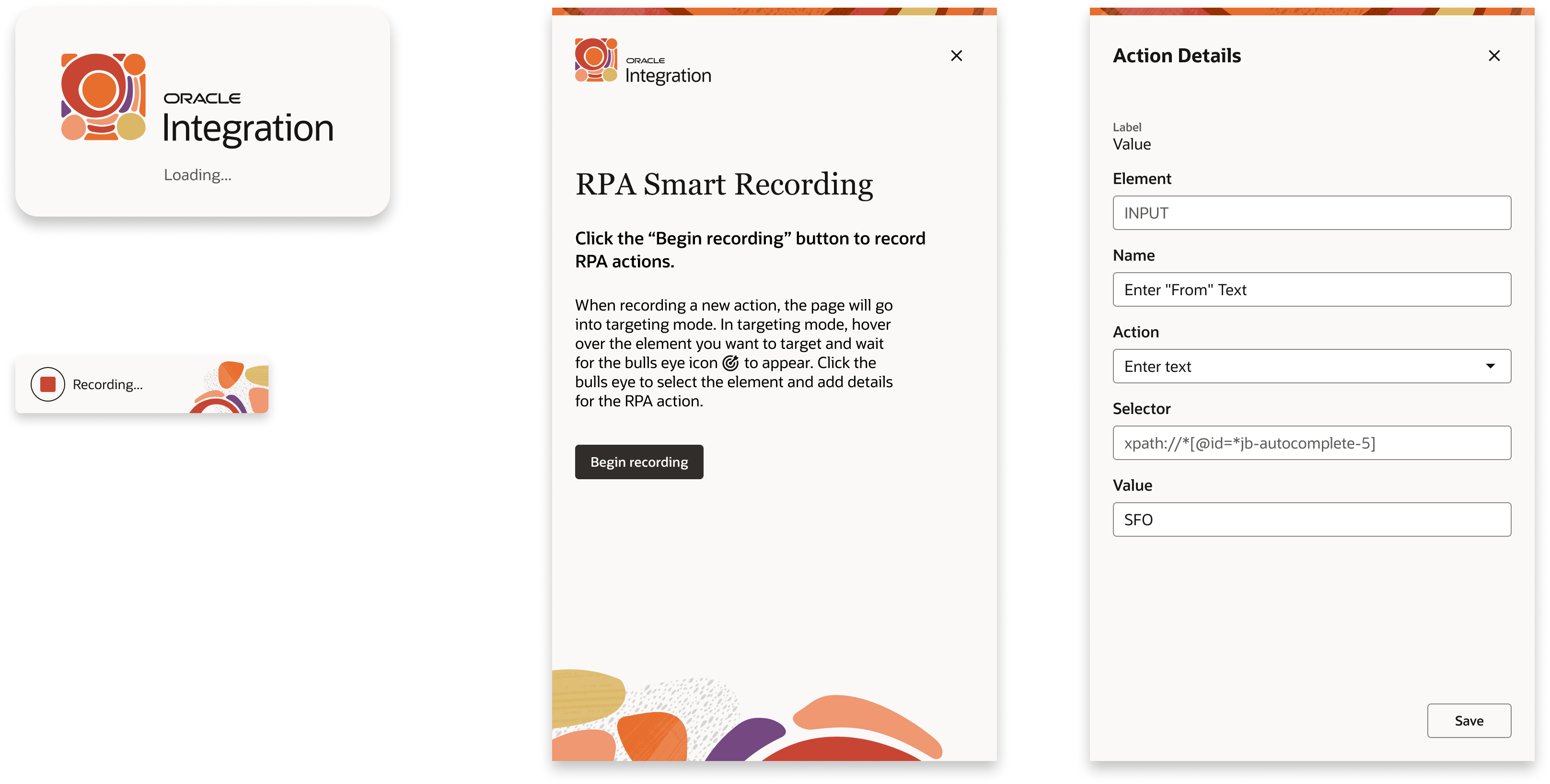
Before agentic AI entered the picture, Robotic Process Automation was how Oracle helped customers automate repetitive business workflows. My work on RPA informed a lot of what I brought to the Agentic AI project, particularly around how to make automated steps legible to the people building and reviewing them. Making a non-developer feel confident that a bot will do the right thing requires a lot of the same design thinking as making a developer feel confident that an agent will.
Read the Oracle RPA case study →
RELATED PROJECTS
Oracle AI Working Group
Before ChatGPT changed the conversation, I formed Oracle's internal AI Working Group, bringing together designers and design managers from across the organization to explore how generative tools could influence the way we design, illustrate, and build products.
Read about the AI Working Group →
Design Systems
The systems thinking that underpins agentic UX work: components, tokens, and structure that scale across a product organization.
© 2026 Marty Hall International. All rights reserved.